
Buying a generator that’s too small means overloads and shutdowns. Buying one that’s too big means wasted capital, higher fuel bills and an engine that never works hard enough to stay healthy. Getting it right comes down to a few key questions, and a team that knows how to ask them. This guide walks you through how to choose the right generator and introduces the MacGen people who’ll help you order it.
What size generator do I need?
Generator sizing starts with your load: everything the set will power at once, plus the extra demand when equipment starts up.
kVA vs kW. Generators are rated in kVA (apparent power), while most equipment is rated in kW (real power). For three-phase industrial sets, a power factor of 0.8 is standard, so a 100kVA generator delivers around 80kW of usable power.
Starting loads. Motors, pumps, compressors and welders can draw several times their running current for a few seconds at start-up. Your generator needs to handle that spike without the voltage dropping out.
Headroom. Most engineers size a set so its normal running load sits at around 70–80% of capacity. That leaves room for start-up surges and future expansion, while keeping the engine loaded enough to avoid wet stacking.
MacGen’s ranges span 8kVA to over 3,500kVA:
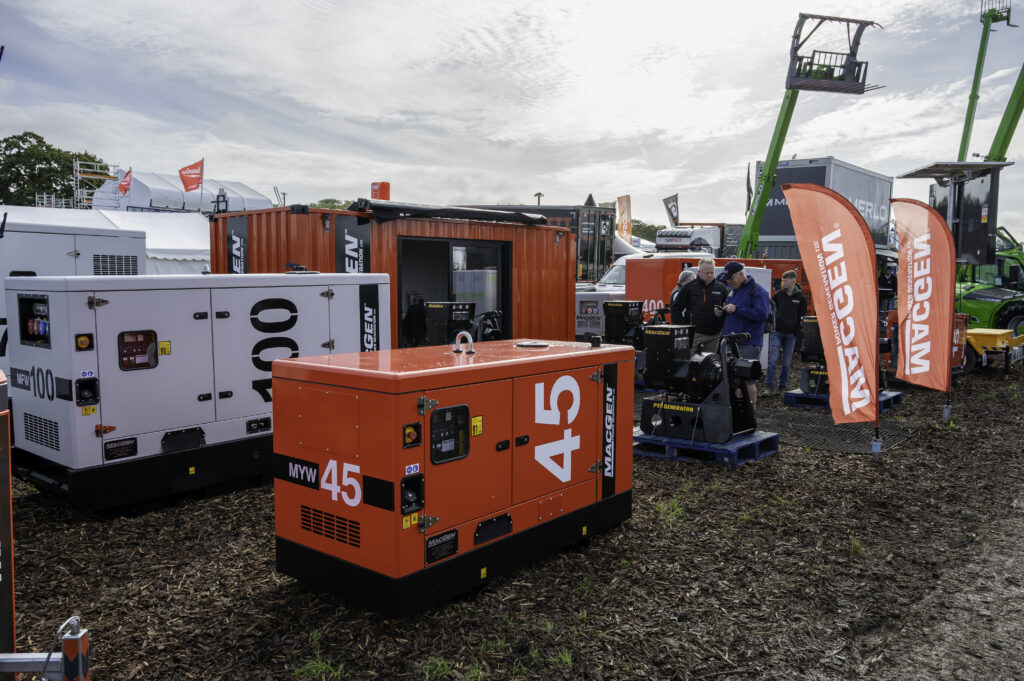
| Range | Output | Typical Use |
|---|---|---|
8kVA – 750kVA | Standby and prime power for sites, farms and commercial buildings | |
20kVA – 1,300kVA | Hire fleets and temporary site power | |
12kVA – 1,893kVA | Continuous running where mains gas is available | |
670kVA – 3,531kVA | Data centres, factories and large infrastructure | |
Single and three phase | Tractor-driven power for agriculture |
7 questions to answer before you order a generator
Standby, prime or continuous?
Will it cover outages, act as the main supply, or run around the clock?
What's the total load?
List every piece of equipment, its kW rating and whether it's single or three phase.
What are the starting loads?
Flag motors, pumps, compressors and anything with a large inrush current.
Diesel, gas or PTO?
Diesel suits most sites; gas works for long running hours with a mains gas supply; PTO suits farms with a tractor on hand.
Static or Mobile?
A fixed install needs a base and changeover switch; a site or hire set needs a trailer or skid and fork pockets.
Where will it sit?
Noise limits, access, ventilation and fuel delivery all affect the canopy and tank you need.
How will it switch over?
An automatic transfer switch (ATS) starts the set and takes over the load when the mains fails.
Not Sure on any of these?
Talk to the MacGen Team
Meet the MacGen Team
From our base in Kilrea, our fully qualified team handles every stage of your generator order, from the first phone call to aftercare. Meet the friendly faces that will be assisting you in the first steps of getting your generator.
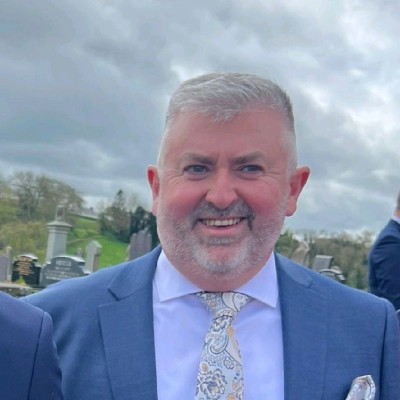
Sam Thompson
UK & NI Sales Manager
I’ve been with MacGen 2 years, 5 months and 10 days, not that I’m counting! Before joining, I worked as a Business Development Manager for an Irish machinery manufacturer.
Probably choosing a generator based purely on its kVA rating without looking closely enough at what they actually need to power. Things like motor starting currents, single-phase versus three-phase loads, and future requirements can make a big difference. Bigger isn’t always better either. The key is correctly matching the generator to the application.
First, I want to understand exactly what they need to power and whether the generator is for standby, prime or occasional use. I’ll normally ask about the electrical load, phase requirements, any large motors or equipment with high starting currents, where the generator will be located, and how they want it connected. From there, we can narrow down the right solution.
A straightforward conversation about what they actually need. I try not to overcomplicate things. I’ll gather the important information, talk them through the suitable options and explain the differences so they can make an informed decision. If I don’t have the answer to their question, I have a team of engineers behind me who will — so I ask them!
I enjoy the variety. No two enquiries are exactly the same, whether it’s backup power for a home, farm or business, or a larger commercial project. It’s satisfying to take a customer’s requirements and work out a practical solution they can rely on.

Robbie Quinn
ROI Sales Manager
I’ve been with MacGen for 6 years, but I’ve worked in the machinery industry for 30 years in total. That experience means I’ve seen just about every type of job and application, and it helps me get customers to the right answer quickly.
Asking for a unit that is either too big or too small. Go too small and the generator will struggle or trip when everything is running. Go too big and you’re paying more upfront and in fuel than you need to, and the engine won’t run at its best. Getting the size right from the start saves a lot of hassle later on.
I always start with three questions: is it three phase or single phase, what’s the application, and what’s their current power usage? Those answers tell me most of what I need to know, and from there I can recommend a generator that suits the job.
Someone who will help them to the best of my ability. I’ll listen to what they need, give them honest advice and make sure they end up with the right generator for the job, not just the first one on the list.
Talking to a satisfied returning customer. When someone comes back to us because their last generator did exactly what they needed, that tells me we got it right. Building those long-term relationships is the best part of the job.
How ordering a generator with MacGen works
Enquiry
Call, email or use our contact form with a rough idea of what you need.
Requirements review
Our sales and technical team go through your load, site and running hours.
Recommendation and quote
We specify the right set, canopy, tank and controls, and send a clear quote.
Build and preparation
Your generator is prepared from stock or configured to order.
Delivery and commissioning
We deliver across Ireland, Northern Ireland and the UK, and commission the set on site.
Aftercare
Planned servicing, spare parts and support keep your generator ready to run.
Choosing a generator: FAQs
Add up the kW of everything that will run at once, allow for motor starting loads, and aim for a running load of around 70–80% of the generator’s capacity. Our team can work this out from a list of your equipment.
kVA is the generator’s total (apparent) power; kW is the usable (real) power. At the standard 0.8 power factor, kW = kVA × 0.8.
A little headroom is sensible, but a heavily oversized diesel generator runs at low load, which can cause wet stacking, carbon build-up and higher fuel costs.
Diesel is the most common choice for standby and site power. Gas generators suit long running hours where a mains gas supply is available.
Yes. MacGen supplies generators across Ireland, Northern Ireland and the UK.
Talk to our team about your generator
Tell us what you need to power and we'll recommend the right generator, with a clear quote and no guesswork.